Why Professional TV Mounting Saves You Money (and Stress)
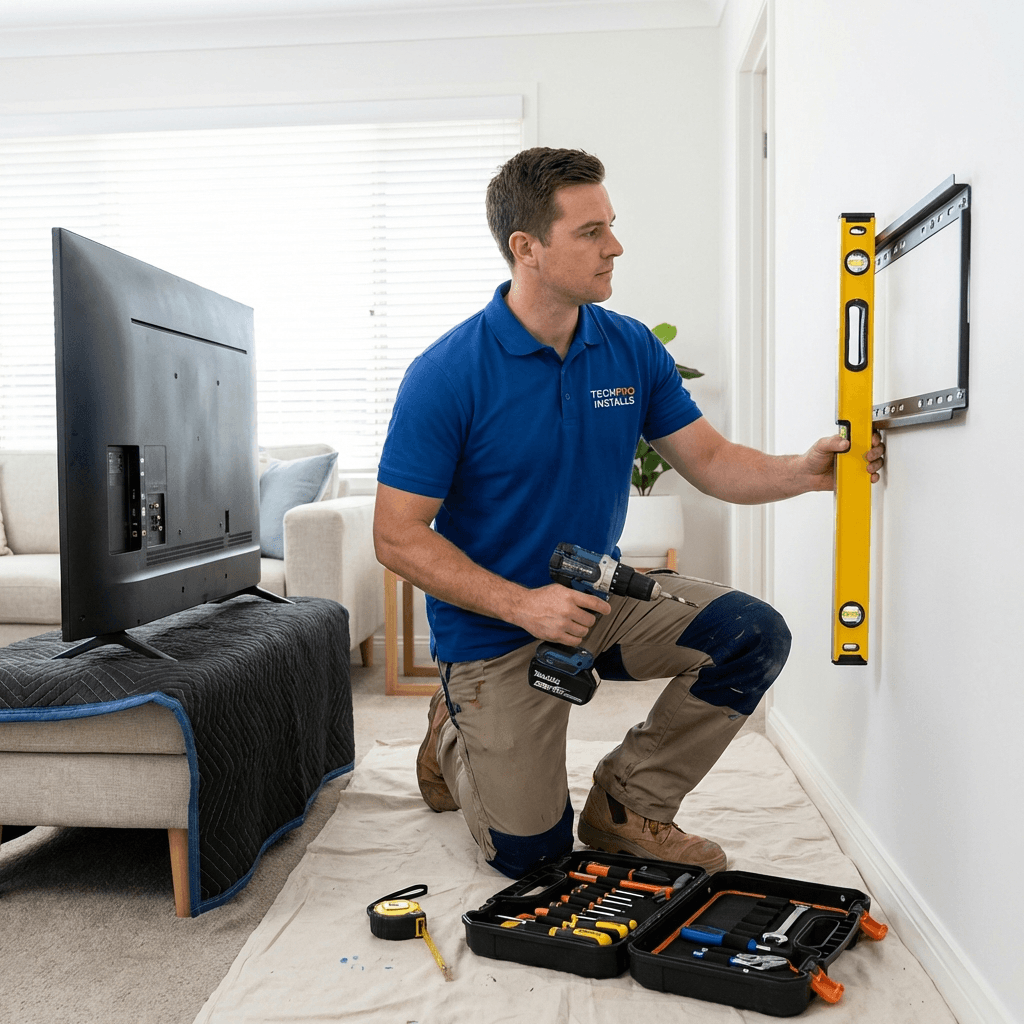
In the age of YouTube tutorials and home improvement shows, the "Do It Yourself" (DIY) spirit is stronger than ever. From painting user bedrooms to building deck furniture, homeowners are taking charge of their spaces. However, there is a significant difference between assembling a bookshelf and suspending a 75-inch, $2,000 sheet of fragile glass and electronics on your wall. TV mounting is deceptive; it looks like a simple task of drilling four holes and tightening four screws. In reality, it is a structural engineering challenge that carries high stakes.
Every year, thousands of televisions come crashing down in living rooms across the country, often destroying the TV, damaging the wall, and posing a serious risk to pets and children. As professional installers, we have fixed countless "DIY fails." In this comprehensive guide, we will explore why professional TV mounting is not just a luxury but a cost-saving and safety-ensuring necessity. We will look at the hidden risks, the true costs, and the specialized knowledge that separates a secure install from a disaster waiting to happen.
1. The "False Positive" Stud Finder Trap
The first step in any mounting job is finding the studs. You head to the hardware store and buy a $20 stud finder. You run it across the wall, it beeps, and you mark your spot. Simple, right? Wrong.
Consumer-grade stud finders are essentially density scanners. They detect changes in density behind the drywall. While they often find studs, they also "find" other things:
- Water Pipes: PEX or copper pipes running vertically can trigger a stud finder. Drilling into one of these will flood your walls instantly, causing thousands of dollars in water damage before you can even find the shut-off valve.
- Gas Lines: In older homes, gas lines may run through walls. Puncturing one of these is a life-threatening emergency.
- Electrical Conduit: Drilling into a live wire can electrocute you and start an electrical fire inside your wall.
- Drywall Seams: Sometimes, a double layer of drywall or a seam with heavy compound can register as a stud. Screwing into this offers zero structural support.
How Professionals Do It: We use industrial-grade scanners that differentiate between wood, metal, and live AC voltage. More importantly, we use magnetic stud finders to locate the actual screws holding the drywall to the stud to confirm the center, and we often drill small "pilot" holes to physically verify the wood before driving a lag bolt. We know the difference between the sound of a drill hitting wood versus metal or empty space.
2. Structural Integrity: It's Physics, Not Just Screws
A static load is one thing; a dynamic load is another. Your TV might weigh 60 lbs, but when you mount it on a full-motion (articulating) arm and extend it 24 inches from the wall, the force exerted on the mounting lag bolts multiplies massively due to leverage. This is simple torque physics.
The "Missed Center" Problem: Standard wood studs are only 1.5 inches wide. To get maximum holding power, your lag bolt must penetrate the exact center of that 1.5-inch strip. If you are off by just half an inch, your bolt is only biting into the edge of the stud. It might hold for a week or a month. but eventually, gravity will win. The wood will split, the bolt will slip, and the mount will tear out of the wall.
Metal Studs: Many modern condos use steel studs instead of wood. You cannot use standard lag bolts in metal studs. They will strip the thin metal immediately. Metal studs require specialized toggle bolts (like SnapToggles) that anchor from behind the stud. A DIYer using wood screws in a metal stud condo is building a time bomb.
3. The True Cost of Failure (Math Time)
Many people DIY to save money. Let's break down the economics of a failed install versus a pro install.
Scenario A: The DIY Attempt
- Stud Finder & Tools: $50
- Mount (Amazon Cheapie): $40
- Time: 4 hours of frustration
- Risk Factor: High
- Outcome: The TV falls three months later.
- Broken TV (Samsung OLED): $2,200
- Damaged Drywall & Flooring: $500
- Total Loss: ~$2,790
Scenario B: Professional Installation
- Professional Service: $150 - $250
- Quality Mount (files with Us): Included or Advice provided
- Time: 45 Minutes (You drink coffee)
- Risk Factor: Near Zero
- Outcome: Perfect viewing for 10 years.
- Total Cost: ~$200
Professional installation is technically an insurance policy. For 10% of the cost of the TV, you guarantee its safety.
4. Tools You Likely Don't Have
A proper, secure installation requires more than a cordless drill and a screwdriver. Our vans are equipped with a mobile workshop:
- Impact Drivers: For driving long lag bolts into hard wood without stripping the head.
- 4-Foot Digital Levels: To ensure the TV is perfectly level (even a 1-degree tilt is visible on a 75-inch screen).
- Socket Sets & Adapters: To fit every possible lag bolt size.
- Toggle Bolts & Concrete Anchors: Heavy-duty anchors (rated for 200lbs+) for metal studs, brick, or concrete installs.
- Laser Levelers: For aligning multiple TVs or ensuring exact centering on a wall.
- Cable Fishing Rods: For hiding wires behind the wall without making massive holes.
- Vacuum & Drop Cloths: We leave your home cleaner than we found it. Brick dust is notoriously hard to clean; we catch it at the source.
5. Aesthetics and Calibration
Hanging the TV is only half the battle. Making it look good is the other half. A DIY job often results in:
- Visible wires dangling down the wall (the "spaghetti look").
- The TV being mounted too high (r/TVTooHigh is a real phenomenon), causing neck strain.
- The TV not being centered on the wall or furniture.
- Input settings not optimized for the room's lighting.
The Pro Touch: We consult with you on the optimal height based on your furniture and seating distance. We offer in-wall wire concealment to hide those ugly HDMI and power cords. We can even install a recessed power outlet behind the TV so the plug doesn't push the TV off the wall. The result is a clean, floating look that looks like it belongs in a magazine.
6. Liability and Peace of Mind
When you hire a legitimate, registered business like ours, you are protected.
Commerical General Liability (CGL) Insurance: If, in a freak accident, we drill into a pipe or drop your TV, our insurance covers the damage. If you do it yourself, your home insurance might deny the claim if they determine it was due to negligence/improper workmanship.
Furthermore, most manufacturers' warranties do not cover physical damage. If you crack the screen while trying to lift it onto the mount, Samsung or LG will not replace it. Our technicians work in teams for large TVs, ensuring safe handling at all times.
Conclusion: Save Your Back, Your Wall, and Your Marriage
Mounting a TV can be stressful. Arguments over where to put it, struggling to lift a heavy screen, and the anxiety of "did I hit the stud?" are not worth the savings. Treat your home theater investment with the respect it deserves.
Don't risk your expensive cutting-edge technology on a guess. Book a professional TV mounting service today and enjoy perfect, worry-free entertainment tonight.